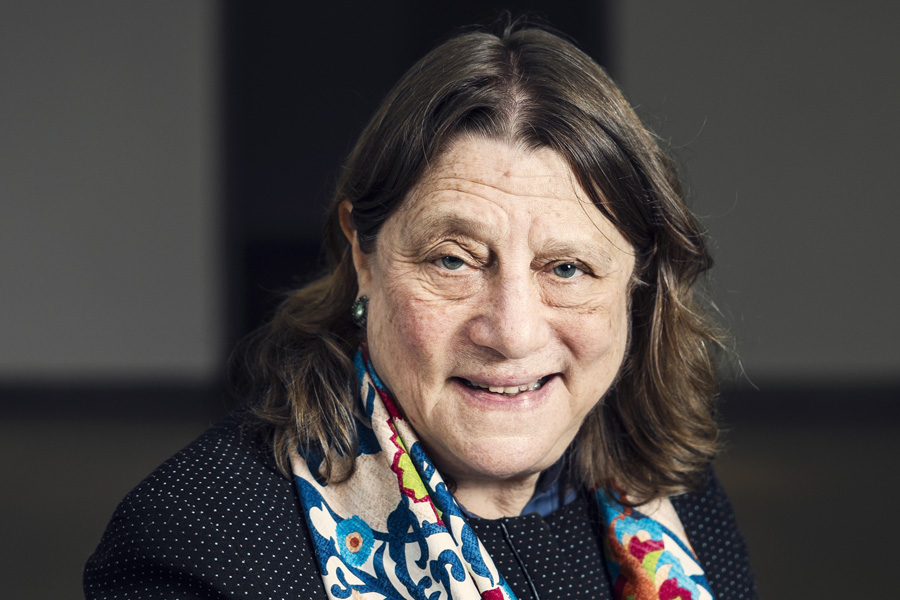
Jane C Ginsburg at a Glance
I regard Jane C. Ginsburg as a scholar at the intersection of ideas, law, and culture. She’s not only an IP professor. She is a prominent copyright and trademark lawyer whose work has shaped author’s rights in the US and elsewhere.
Jane Carol Ginsburg, born July 21, 1955, in Freeport, New York, was raised in a law-loving family. The household air contained it. Her mother, Ruth Bader Ginsburg, was a prominent American jurist. Martin D. Ginsburg, her father, was a skilled tax lawyer and dedicated academic. Jane created her own route in that atmosphere, anchored in hard thought, discipline, and civic purpose.
As Columbia Law School’s Morton L. Janklow Professor of Literary and Artistic Property Law, she is well-known. She is Kernochan Center for Law, Media, and the Arts faculty director. She has led authorship, ownership, creativity, and technology issues for decades through teaching, writing, and public involvement.
Early Life and Education
I find Jane C Ginsburg’s educational journey especially striking because it reflects both depth and range. She built her foundation in the humanities before moving into law, and that combination helps explain the texture of her scholarship.
She earned a B.A. in 1976 from the University of Chicago, followed by an M.A. in 1977 from the same institution. Those years placed her in one of the country’s most intellectually demanding academic environments. She then went on to Harvard Law School, receiving her J.D. in 1980.
She continued her studies. Université de Paris II gave her a D.E.A. in 1985 and a Doctor of Law in 1995, broadening her legal and cultural knowledge. Her career was defined by her international legal training. It offered her a second lens to evaluate U.S. and European copyright and related methods with extraordinary clarity.
Fluency in French and Italian also reinforced that global orientation. For a scholar of intellectual property, language can function like a second set of keys. It opens different legal traditions, different assumptions about authorship, and different ways of balancing commerce with culture.
A Career Shaped by Intellectual Property
Professor Jane C. Ginsburg joined Columbia Law School in 1988. A lengthy and crucial chapter in American law education began that day. She became the Morton L. Janklow Professor of Literary and Artistic Property Law, one of the school’s elite seats.
She studies intellectual property, which can sound abstract unless I explain it. She practices creative ownership law. She studies who governs literary, artistic, and commercial expression. It examines how legislation protects writers, artists, and creators in new technology and markets.
One of her specialties is copyright law. She has long supported strong author rights. A massive distribution mechanism does not hide the author in her work. Authorship remains crucial. She has been a key voice in rapid technological development, especially as digital media and artificial intelligence have brought new legal and moral issues.
Another key area of her practice is trademark law. She also pays attention to how legal systems retain meaning, identity, and market trust. Names, brands, and symbols are more than labels. Legally, they hold reputation, value, and social recognition.
Books, Scholarship, and Influence
I would describe Jane C Ginsburg as a scholar whose influence extends well beyond the classroom. She has written and co written major casebooks and scholarly works used by students, lawyers, and academics.
Copyright: Cases and Materials, updated through 2024, and International Copyright: U.S. and EU Perspectives are well-known. She has also worked on trademarks and legal approaches. Casebooks are important because they go beyond ideology. They influence generations of law students’ thinking.
Her writing has reached policymakers and international lawyers. For American Law Institute transnational intellectual property conflicts projects, she co-reported. That role shows high-level professional faith in her judgment. It displays her influence’s scope. Not only does she interpret laws afterward. She is shaping the rules discussion.
Her current research on humanist copyright and AI outputs reveals her ongoing interest in modern transformation. Her career is not stalled in prestige. Like a lighthouse on a moving coast, it feels alive.

Honors and Professional Standing
Over the years, Jane C Ginsburg has received recognition from major scholarly institutions. She was elected to the American Philosophical Society in 2013 and has also been associated with the American Academy of Arts and Sciences and the British Academy as a Corresponding Fellow.
These honors are more than decorations—they demonstrate intellectual reach. They show a career spanning law, comparative law, culture, and policy. She was ALAI’s vice president.
A worldwide engagement matches her profile wonderfully. Her research crosses borders because intellectual property does. A novel published abroad can be copied. A trademark launched in one market can be useful worldwide. Her work has helped lawyers think clearly and disciplinedly about cross-border issues.
The Ginsburg Family: Law, Art, and Achievement
I cannot understand Jane C Ginsburg fully without looking at her family. The Ginsburg family is one of those rare American families in which public achievement appears in multiple forms, like branches growing from a single deeply rooted tree.
Ruth Bader Ginsburg
From 1933 until 2020, Ruth Bader Ginsburg, Jane’s mother, was a legendary Associate Justice. Supreme Court. She was a leading gender equality campaigner. This historical person was familiar to Jane. Her mother was brilliant and determined.
The influence of Ruth Bader Ginsburg on Jane’s values seems impossible to ignore. Precision, persistence, and serious engagement with law all formed part of the atmosphere in which Jane came of age.
Martin D. Ginsburg
Her father, Martin D. Ginsburg, lived from 1930 to 2010. He was a renowned tax attorney and professor, remembered not only for legal excellence but also for his wit, warmth, and famously supportive role in Ruth Bader Ginsburg’s career.
That support matters in the family story because it suggests a household built on partnership and mutual respect. Jane grew up seeing professional ambition not as a solitary march but as something nourished by loyalty and shared purpose.
James Steven Ginsburg
Jane’s brother, James Steven Ginsburg, took a different but equally distinguished road. He became the founder and president of Cedille Records, a respected classical music label based in Chicago. His work underscores another family theme: a strong connection to the arts.
For Jane, whose legal work centers on literary and artistic property, that artistic dimension feels especially resonant. Law and culture were not separate rooms in the family house. They were adjoining chambers.
Marriage and Children
In the summer of 1981, Jane C Ginsburg married George T. Spera Jr., a lawyer associated with Shearman & Sterling. Their long marriage suggests a durable partnership built across the demands of legal and academic life.
Together they have two children, and both represent yet another extension of the family’s intellectual and creative energies.
Their son, Paul Spera, was born in 1986 and later graduated from Yale University in 2008. He pursued acting, entering a profession that depends on performance, interpretation, and presence. In a family crowded with legal intellect, his path adds an artistic note.
Clara Spera, their 1990-born daughter, graduated from Harvard Law School in 2017. As an attorney, she has written thoughtfully about family, style, and legacy. Her marriage to Scottish actor Rory Boyd adds another artistic strand to the family’s journey.
I am struck by the balance here. One branch returns to law. Another leans toward performance. Together they suggest a family that values both analysis and expression.
Timeline of Key Milestones
| Year | Milestone |
|---|---|
| 1955 | Jane Carol Ginsburg is born on July 21 in Freeport, New York |
| 1976 | Earns B.A. from the University of Chicago |
| 1977 | Earns M.A. from the University of Chicago |
| 1980 | Receives J.D. from Harvard Law School |
| 1981 | Marries George T. Spera Jr. |
| 1985 | Completes D.E.A. at Université de Paris II |
| 1986 | Son Paul Spera is born |
| 1988 | Joins Columbia Law School faculty |
| 1990 | Daughter Clara Spera is born |
| 1995 | Earns Doctor of Law from Université de Paris II |
| 2013 | Elected to the American Philosophical Society |
| 2020 | Death of Ruth Bader Ginsburg |
| 2024 | Continues casebook updates and scholarship on copyright and AI |
| 2025 and beyond | Remains active in teaching, publishing, and legal debate |
Public Image and Personal Style
Jane C Ginsburg maintains a relatively low personal public profile. She is known much more through her scholarship, teaching, and legal commentary than through personal publicity. In an era when visibility is often confused with influence, that distinction matters.
Her reputation rests on substance. She appears most often in academic, legal, and institutional settings. That fits the shape of her career. She is a builder of frameworks, a curator of doctrine, and a defender of the idea that creative labor deserves meaningful protection.
No independent public numbers determine her net worth. She had a long, secure, and renowned career at one of the nation’s top law schools, along with significant publication and professional participation. Her family’s fame has boosted her profile, but her reputation is her own.
FAQ
Who is Jane C Ginsburg?
Jane C Ginsburg is an American legal scholar, attorney, and professor known for her expertise in intellectual property law, especially copyright and trademark law. She teaches at Columbia Law School and directs the Kernochan Center for Law, Media and the Arts.
When was Jane C Ginsburg born?
She was born on July 21, 1955, in Freeport, New York.
What is Jane C Ginsburg’s full name?
Her full name is Jane Carol Ginsburg.
Who are Jane C Ginsburg’s parents?
Her parents were Ruth Bader Ginsburg, the U.S. Supreme Court Justice, and Martin D. Ginsburg, the noted tax attorney and professor.
Is Jane C Ginsburg related to Ruth Bader Ginsburg?
Yes. Ruth Bader Ginsburg was her mother.
Who is Jane C Ginsburg’s brother?
Her brother is James Steven Ginsburg, the founder and president of Cedille Records.
Who is Jane C Ginsburg married to?
She married George T. Spera Jr. in 1981.
Does Jane C Ginsburg have children?
Yes. She has two children, Paul Spera and Clara Spera.
What does Paul Spera do?
Paul Spera is an actor and a Yale University graduate.
What does Clara Spera do?
Clara Spera is an attorney who graduated from Harvard Law School in 2017.
What is Jane C Ginsburg known for academically?
She is known for major scholarship in copyright, trademark, and international intellectual property law, as well as for teaching and writing influential legal casebooks.
What position does she hold at Columbia Law School?
She is the Morton L. Janklow Professor of Literary and Artistic Property Law and serves as faculty director of the Kernochan Center for Law, Media and the Arts.
Has Jane C Ginsburg worked on international legal issues?
Yes. Her education in France, multilingual ability, and comparative scholarship have made her a major voice in international copyright and transnational intellectual property issues.
What are some notable themes in her recent work?
Recent work has focused on authors’ rights, human centered copyright theory, digital change, and legal questions raised by artificial intelligence.
Is Jane C Ginsburg active on social media?
She keeps a low personal social media profile and is more often mentioned through professional, academic, and legal channels.