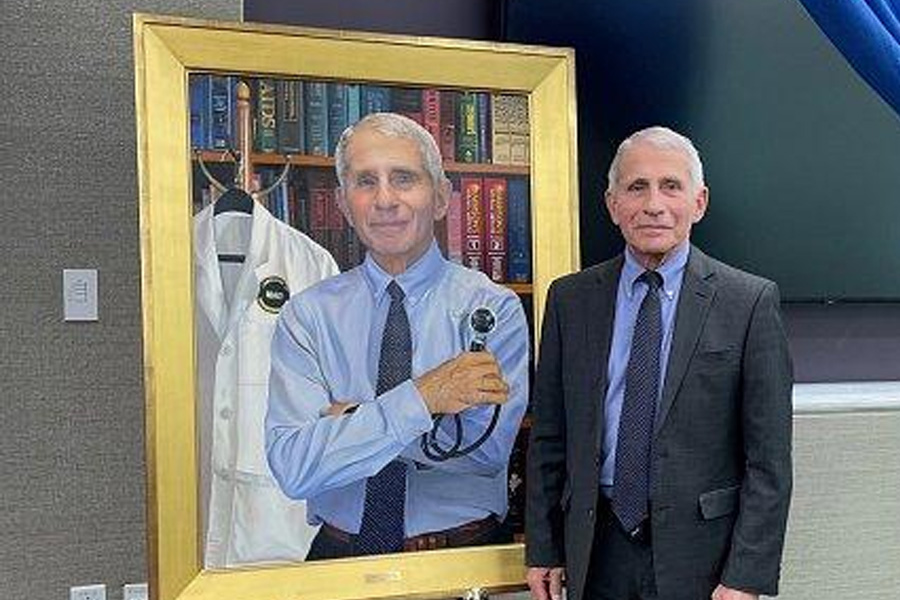
Basic Information
| Detail | Information |
|---|---|
| Full name | Stephen A. Fauci |
| Common public name | Anthony Stephen Fauci |
| Birth date | December 24, 1940 |
| Birthplace | Brooklyn, New York |
| Profession | Physician, immunologist, public health leader |
| Education | Regis High School, College of the Holy Cross, Cornell University Medical College |
| Best known for | Leadership at NIAID, HIV/AIDS response, COVID 19 public guidance |
| Major federal role | Director of NIAID from 1984 to 2022 |
| Later role | Chief medical advisor to the President |
| Spouse | Christine Grady |
| Children | Megan, Alison, Jennifer |
A life shaped by discipline, service, and pressure
I see Stephen A. Fauci as a lighthouse rather than a flashbulb. He did not rise from nowhere or stay noticeable by appeal. He remained visible because he spent decades at the center of stark medical facts, where ambiguity is rife and delays cost lives.
He was born in Brooklyn, New York, to an Italian American drugstore and neighborhood service family on December 24, 1940. Early surroundings mattered. He saw the practical side of medicine—where health is personal, local, and immediate—firsthand. He graduated from Cornell University Medical College in 1966 after attending Regis High School and the College of the Holy Cross. These years lay the groundwork for a career spanning generations and crises.
A family story with deep roots
When I look at Stephen A. Fauci’s family background, I see a story of work, migration, and continuity. His father was Stephen Fauci, a pharmacist who helped anchor the family in a neighborhood business. His mother was Eugenia Lillian Abys Fauci, and she was part of the daily rhythm of that family life. The pharmacy was not just a store. It was a classroom, a workplace, and a public square in miniature.
The family structure extended beyond his parents. The publicly identified sibling in the material is Denise Scorce. She is Stephen A. Fauci’s sister. That detail matters because it shows the family was not a legend floating above real life, but a normal household with names, responsibilities, and shared history.
His grandparents deepen that picture. On one side were Antonino Fauci and Calogera Guardino. On the other side were Giovanni Abys and Raffaella Trematerra. These names speak to the older immigrant generation, the one that carried memory across the Atlantic and planted it in American soil. I read that as inheritance in the strongest sense, not wealth, but habits, values, and endurance.
Marriage, children, and a private life beside a public one
Stephen A. Fauci’s personal life has also been rooted in family. His spouse is Christine Grady, a nurse bioethicist whose own work sits close to the ethical heart of medicine. Their marriage began in 1985, and together they raised three daughters. The daughters are Megan, Alison, and Jennifer.
Megan is described in the material as a teacher in New Orleans. Alison is described as a software engineer, including work connected to Twitter and X. Jennifer is described as a psychologist or psychology professional in the Boston and Cambridge area. Their careers suggest three distinct paths, yet each still reflects a family where public service, intellect, and professional commitment were normal rather than exceptional.
The family dimension is important because Stephen A. Fauci spent so much of his life in the public eye. The spotlight often flattens people into symbols. Family restores the dimensions. It reminds me that the man behind the podium was also a husband, father, son, brother, and grandson of an older immigrant line.
The making of a career
Stephen A. Fauci began his federal career in 1968 at the National Institutes of Health. From there, he moved through a series of leadership positions with the patience of a climber who knows the mountain cannot be rushed. He became head of NIAID’s Clinical Physiology Section in 1974, chief of the Laboratory of Immunoregulation in 1980, and director of NIAID in 1984. That final role became the defining post of his career.
He held that position until 2022. That means he served through the AIDS crisis, Ebola scares, Zika concerns, and the COVID 19 pandemic. Few public servants have had such a sustained view of infectious disease history while also helping shape it in real time. In that sense, his career was not a single campaign but a long relay.
His work on HIV/AIDS became one of his defining achievements. He was deeply involved in the federal response, and he later played a major role in the development and support of PEPFAR, the U.S. global AIDS initiative. He also became one of the most recognized voices in American biomedical science during the COVID 19 era. The country came to know his face, his cadence, and his habit of explaining hard things with measured clarity.
Achievements that changed the frame of public health
Stephen A. Fauci earned honors over decades, but what they represent matters. The National Medal of Science, Lasker public service award, and Presidential Medal of Freedom confirm this. He was a national medical figure and researcher.
His effect across administrations is equally notable. He advised several presidents and stayed in high-pressure politics as politics changed. Such continuity is rare. Work isn’t glamorous. It’s the arduous effort of defending a line under attack.
He became a human measuring stick in popular memory. People relied on him for timing, caution, and interpretation during outbreaks. That job drew praise and criticism, often simultaneously. He stood in the public square, a storm cellar, for years.
A timeline of major moments
1940, born in Brooklyn.
1966, earned his medical degree from Cornell University Medical College.
1968, joined the National Institutes of Health.
1974, became head of the Clinical Physiology Section.
1980, became chief of the Laboratory of Immunoregulation.
1984, became director of NIAID.
1985, married Christine Grady.
1980s and onward, became a major federal figure in HIV/AIDS and infectious disease response.
2021, served as chief medical advisor to the President.
2022, retired from NIAID and federal service.
2024 and 2025, remained a major subject of memoir coverage, interviews, public commentary, and political debate.
FAQ
Who is Stephen A. Fauci?
Stephen A. Fauci is a physician and public health leader known for decades of work on infectious diseases, especially HIV/AIDS and COVID 19. I see him as one of the most influential medical administrators in modern U.S. history.
Who are Stephen A. Fauci’s parents?
His parents are Stephen Fauci and Eugenia Lillian Abys Fauci. His father worked as a pharmacist, and that family business shaped much of his early life.
Who are the family members most clearly identified in the material?
The most clearly identified family members are his spouse Christine Grady, his children Megan, Alison, and Jennifer, his sister Denise Scorce, and his parents Stephen Fauci and Eugenia Lillian Abys Fauci. His grandparents are identified as Antonino Fauci, Calogera Guardino, Giovanni Abys, and Raffaella Trematerra.
What is Stephen A. Fauci best known for?
He is best known for leading NIAID from 1984 to 2022 and for being a central voice in the national response to HIV/AIDS and COVID 19. He also became widely known to the general public through his appearances in government briefings and interviews.
What makes his career unusual?
The length and continuity make it unusual. He worked inside the federal health system for more than five decades and advised several presidents across different political eras. That kind of staying power is rare, almost geological in scale.
Is there clear public information about grandchildren?
Not in the material used here. The available details clearly name his children, but I do not have reliable confirmation of grandchildren names from the same material.